Archive for March 2020
This is long, but worth reading in this time of stress and tension that precedes, I am sure, an ultimate era of peace and renewal. For the original of the article, click on “Greater good.”
HOW TO KEEP THE GREATER GOOD IN MIND DURING THE CORONAVIRUS OUTBREAK.
In the midst of our panic around COVID-19, we must look to each other to help us get through it.
BY JILL SUTTIE | MARCH 10, 2020
I just learned that my son’s college, the University of Washington, would becancelling all in-person classes and finals to help contain the spread of the coronavirus. One confirmed on-campus case prompted the university’s response.
Though the university will incur high costs—they have to deep-clean the whole campus, for example—I, for one, am truly grateful for their swift action and putting students first. It’s one of the many ways that I feel cared for in the midst of this crisis, and one of many caring acts that I expect to see in the weeks ahead.
Why expect more cooperation and compassion in the face of an epidemic? Because, contrary to popular belief, crises often tend to bring out the best in people. A report that looked at how people responded during the September 11th Twin Tower attacks showed that people bent over backwards to help others escape, sometimes at great personal risk to themselves. Other reports on the aftermath of natural disasters show that strangers will stick out their necks for each other to help.
While it’s true that sometimes disasters can lead to a minority taking advantage of the situation—for example, stealing people’s possessions when they have to leave their house—this is not a common response, much as it grabs headlines. Instead, when we face a common enemy, like an epidemic, we are more likely to pull together for the benefit of everyone.
Notice how many young and healthy people are taking seriously the need to wash their hands frequently, cover their mouths when they cough, stay home when sick, or wear masks when in public. Sure, no one wants to get sick—but, at the same time, no one wants to be responsible for making others sick.
In fact, research shows that protecting others is a huge motivator for doing the right thing. For example, one study looked at what prompts handwashing behavior in hospital doctors and nurses. Researchers found that signs saying, “Hand hygiene prevents patients from catching diseases,” were more effective at prompting handwashing than signs simply saying, “Hand hygiene prevents you from catching diseases.” In other words, appealing to the health care workers’ altruistic care for their patients was more effective than appealing to their self-interest.
In fact, it may simply be human nature to be kind and helpful when others need us. In one recent study, children only four to five years old who were told that resisting a treat would benefit another child were better able to delay gratification than children told their actions would only affect themselves. Similarly, babies as young as 19 months old were willing to give food away to someone who appeared to need it, even when hungry themselves.
Of course, not everyone acts altruistically in these situations. So, what makes it more likely they will, and how can we use that to our advantage? Here are four ways we can encourage more altruism for fighting the virus.
- Look to the heroes
There will always be heroic efforts in a disaster—people who sacrifice themselves for the good of others. Think of the health care workers who are treating people infected with this virus at great personal risk. Or those infected with the virus who voluntarily isolate themselves for weeks to protect the public.
When we hear stories of these people, we feel what is called moral elevation—a warm feeling inside that inspires us, fueling optimism and a desire to act altruistically ourselves. While the temptation might be to focus on fear and everything going wrong, we can redirect our attention to those who are doing the right thing, which will lead us to be better citizens ourselves.
- Stay calm and focused
It’s easy to be lost in fear when disaster strikes. However, it doesn’t help anyone to stir up panic about the situation, because we don’t think as clearly when we are in emergency mode. You can see how this has played out already, as people have been stockpiling masks and creating a shortage that could affect the people who truly need them—those who are sick and need masks to avoid spreading the disease to the rest of us.
Body Scan Meditation
Feeling tense? Feel your body relax as you try this practice
Try It Now
How can we stay calmer and make wiser choices? One way is to use whatever tools you have at your disposal for keeping a cool head—like practicing mindfulness, which has been shown to both lessen emotional reactivity and help us make better decisions. We might take a walk in the park or nearby woods and let nature soothe us. Or we could talk to a friend—a calm friend, that is—who can help us reduce our anxiety.
Of course, our normal ways of connecting socially—like singing together at a concert or going to large parties—may have to change. But whatever we can do to maintain an air of calm, and to spread it to those around us, the better. After all, our emotions tend to be contagious in our social circles, and we should do our best to keep fear and panic contained.
- Show gratitude
One of the kindest things we can do is to say “thank you” to those who are doing what they can to fight the outbreak. As with my son’s university, it doesn’t hurt to send a message of thanks to people and organizations that are doing the right thing—whether it’s a tour group that offers refunds for cancelled trips, the neighbor who delivers a spare mask to you, or viral experts who give you straight-up information on how to stay safe.
When we show gratitude toward others, we let them know that their actions matter, which encourages more of the same kind of behavior—not only toward the grateful person but to others. Creating a cycle of altruism is helpful when we are faced with a challenge that affects us all, helping to foster trust in each other and care for each other’s plight.
- Remember our common humanity and show compassion
When we are fearful, our first instinct might be to cast blame on others or to indulge in prejudice toward groups we see as responsible. News reports already show that some people of Asian descent in the United States are finding themselves shunned or the victims of racist profiling, simply because the virus appears to have originated in China. Though we might rationally know that no one person or country can be blamed for a viral outbreak, our minds still seek simple explanations.
Research suggests that when we recognize our common humanity and show compassion, we are more likely to pull together and to solve issues that may be complex in nature. You can start by giving yourself some compassion, which can helpyou become more willing to admit mistakes and take steps to correct them. This is important, as human error can be costly when there is a viral outbreak, and we need to work together to learn from our mistakes.
Of course, all of these guidelines don’t supplant the importance of practicing good hygiene. We need to continue to frequently wash our hands and avoid touching our faces, so that we can lessen the chance of infecting ourselves and others. But we also should remember our social hygiene—looking for the heroes, staying calm ourselves, being grateful, and remembering our common humanity. In this way, we can help to make the world safer for all of us.
Remember an earlier blog where I quoted a client asking “How did they let this happen to them?”
Here’s a part of the answer. By choosing to believe what one wants to believe and rejecting facts one doesn’t like.
The following paragraphs are taken from current web sites:
“Ophthalmologist Li Wenliang died at 2:58 am, Wuhan Central Hospital said in a post on its verified account on Chinese social media platform Weibo.
“The 34-year-old sent out a message about the new coronavirus to colleagues on December 30, but was later among eight whistleblowers summoned by police for ‘rumour-mongering.'”
“In early January, he was called in by both medical officials and the police, and forced to sign a statement denouncing his warning as an unfounded and illegal rumor.”
Where in history have we heard this before? –Truth tellers being forced to deny the truth — even punished.
If you want to read more, check out this web site.web site
This post was never a part of “My Father’s House,” though the content might apply. I’m not a poet, but I have been taking a local poetry course just for fun. This one turned out not so bad, so I’m bold enough to expose it here. The topic assigned was flower(s).
LILLIES OF THE VALLEY
Lillies of the Valley
My father’s love in a bouquet
Always my mother’s tears.
Why do we cry when we are happy?
Coffin lined in yellow
My mother’s favorite color
Would she know we chose it?
Lillies of the Valley not in bloom
Spring came to my new home
Wild growths of Lillies of the Valley
Would my mother see them?
I fell to my knees as the tears flowed.
I’ve signed a joint publication agreement with Calumet Publishing to produce My Father’s House to be ready – if all goes as planned – in time for Christmas, 2020.
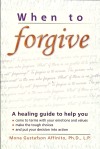
Author name: Mona Gustafson
I’ll keep you posted on progress.
Warning, this is a long excerpt. It helped a lot in shortening the manuscript, though.
“On the way home from Vermont, Doug started complaining about stomach pains. Poor kid. I think we weren’t sympathetic enough. We thought the hotdogs we cooked out must have disagreed with him. It’s not like Doug to complain, so we wondered if we should take him to the emergency room when we got home to Hamden. Instead we called Bill Lavelle across the street. As a fireman he’s trained in emergency diagnosis. He asked us a few questions and then came over and poked around a bit. Poor Doug. He was really hurting. I wondered if it might be appendicitis, but Bill said no. I called Dr. Wessel too. When I told him the symptoms, he said it wasn’t appendicitis – that we should give him aspirin and put him to bed.”
“Oh dear, I can feel it coming,” Jennie had pulled herself out of bed when she knew who was calling.
“But when he woke up in the morning,” Mona went on, “the pain was just too intense. Lou was off to work, and Marjy Ehmer and I were in the kitchen planning for the fall semester. I called Lou to come home so we could take Doug to the doctor and made last minute arrangements with Marjy. Dr. Wessel was so sweet when we got there. Usually he chats with me while he examines the kids, but this time he gave Doug his full attention.
“What do you think it is?” he asked Doug.
“Appendicitis,” was the Pain-filled response.
“I think you’re right. Let’s get you straight to the hospital. I’ll call ahead.”
“Oh, mother. The poor kid. It turns out his appendix was about to rupture. Thank God we live after Sulfa drugs were discovered.”
“Oh my poor Doug,” Jennie’s memories went back to the baby she helped care for eleven years ago.
“Mother, it was so awful. Yale New Haven is a teaching hospital and the medical personnel kept coming in to poke him in the stomach while we waited for him to go to surgery. Now that everything is over, I’m just mad at myself that I didn’t make them stop. But I’m proud of myself that I insisted they let me stay in his room afterwards. I had to call Dr. Wessel to intervene and make them allow it. I can’t imagine leaving any child alone waking up from surgery.”
“How is he now?” Carl asked. “Can we come to visit?”
“The doctors agree with me that it’s probably best if only Lou and I visit. And Lisa wants to come, but I have to go the route of Dr. Wessel again to get permission.”
The next report set Jennie’s mind at ease. “He’s doing fine. He’ll be here for a week before they remove the stitches. Then they’ll let him come home in a day or two.”
“I stopped by school today to leave the materials I need to start the semester. I have to thank Doug for having his attack at a convenient time. It seems like my kids have always known to do their sicknesses when I could be home anyway. But the poor thing, mother. He looks so pale. And you can tell he’s in pain the way he orders me around like a slave.”
Mona, spending each day in the hospital with him, called every evening to report. “You wouldn’t recognize our Doug,” she told them. “He is so cranky and bossy, but it kind of pleases me that he’s not holding back.”
Then came the day of stitches removal. “Lisa was with me and we both watched. The doctors wanted us to leave, but I insisted we wouldn’t cause a problem. Lisa was great, sitting on my lap and watching. I think she has a stomach for this kind of stuff.”
Mona called Jennie and Carl right away on homecoming day. “He’s so happy to be home and quiet with me. Lou and Lisa have gone to Branford where Lou will be Godfather to Genny and Bill Goff’s baby.”
“May we come see him”?”
“Sure, I know it will make him happy to see you.”
They made it a short stay, giving him a gift of a basket organizer for his desk.
“It made me feel so good to see how happy he was when we came. Poor kid. He looks so pale, though.” Jennie settled into the passenger seat.
“Surgery is nothing to fool around with” Carl remembered. “It takes a lot out of a guy.”
A few days later Mona had another message.
“I’m sorry I didn’t call you sooner, but I had to take Doug back to the doctor. He said it was an abscess — very unusual. ‘He must have suffered some stress,’ he said.’”
“All I can say is, Lou’s parents came after you did — and stayed, — and stayed, waiting for Lou and Lisa to get home. Mama was so worried, she kept hugging him and pinching his cheek. It’s all because they love him, I know – and he loves them — but after they’d been here almost two hours, Doug drew me into the bathroom and, his face beet red and his fists tight, commanded ‘Get them out of here!” Oh mother, I felt guilty I hadn’t asked them to leave sooner, and I got in trouble with Alma for doing it. But all is well now. He’s getting better. I told him he could have one more day of being mean to me, then he had to stop. He did just that – one more nasty day, then back to his own self. Now he’s having a good time doing quiet things and should be able to start school on time.”
The visit was short. It wasn’t until the next day that Thelma got to be with Dorothy who was a few years younger. “Call me Dotten,” she said as Thelma and Harvey gathered with her and Nils, her older brother, in a corner of the Covenant Church parlors after the funeral.
Thelma liked what Dotten was wearing, and she told her so.
“I don’t see much of my father,” Dotten said. “He lives and works on Long Island — a valet for a rich man there. But he sends money, especially for clothes. He wants us to look nice.”
Thelma’s face collapsed. I don’t know what I’d do if I couldn’t be with my daddy. “Oh, don’t you miss him?’ she said.
“Not really. I’m used to it,”
Thelma couldn’t imagine it.
Anna was consigned to God’s good earth at Forestville Cemetery, after which the family moved on to Emil’s to continue the reunion.
And what was the specific thing Thelma and Harvey remembered about their cousins from the Bronx? Dotten and Nils couldn’t sleep because the birds made too much noise.
WUHAN, China—A Chinese Doctor who became a folk hero after he was taken in by authorities for warning about the dangers of a deadly new virus now spreading around the world died Friday after becoming infected with it.
What happens when “the powers that be” come to believe their wishes and hopes define reality? When science and knowledge take second place to political power?
Chaos and disaster. Maybe not immediately, but ultimately a huge price is paid for ignoring the truth.
Have you heard about the coronavirus? Have you heard about the scientific findings re climate change?
Just sayin’
I remember my student tour of Europe in 1951. Austria, Germany, Switzerland, France, England, Holland, Belgium. Eveywhere we met people like us. And everywhere except Switzerland we found bombed out buildings. I remember Germany especially, men without arms and legs making their way by new businesses trying to get a foothold in any corner where temporary buildings could be erected. Most of all I remember thinking “all these people are just like us” as we communicated through gestures and what minimal knowledge we had of the language of the country we were visiting. I remember our twenty cent packs of cigarettes were worth 60 cents for just one cigarette. It was our medium of exchange for tipping. Let me repeat. I remember the people we met were just like us.
And I remember the student guide who said to me as we tried to understand what had happened, “This will come to you someday in the United States.” Yes, more than remember that, I have never forgotten it.
I remember an 8-year-old Mona (me) in 1937 thinking Hitler must be a nice man, because I saw a picture of him smilingly accepting a bouquet of flowers from a little girl my age. I remember practicing a speech I would deliver to him explaining why he should be nice to other people.
Years later, I remember a client whose family was left behind in a country cruelly dominated by the USSR. In her distress over their situation she wondered, “How did they let this happen to them?”
I love traveling, and everywhere I go I meet people who are just like me – trying to make a good life.
I remember wondering how people could let it happen to them.
How could it happen? Could it happen to us?
I remember, and I wonder.



 monagustafsonaffinito