Archive for January 2025
Just so you’ll know, I’m getting more reading done these days since I discovered that my body likes occasional rests on my back since I got another — this time minor — compression fracture (I have no idea how). L2 this time. I’ve come to picture my back as a long tube filled with wet sand, still keeping me upright, though, and appreciating at least a half-hour a day of walking.
But now down to business
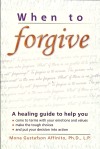
This amazing book certainly doesn’t need more reviewers, but I’m pressed to describe how impressed I am by it. It’s a mystery story page-turner, except it’s not fiction. From environmental injustice monitored by zip code to systemic inequality and shocking (but I am no longer shocked) governmental insensitivity. In my ninth decade I’ve finally come to accept that those who are elected to serve us often do not, unless it is in the interest of their careers and the well-being of those like them. Truly a horrifying reality.
But there’s more. The courage of Dr. Mona, the caring pediatrician, the persistence in spite of efforts to shame and destroy her, the beautiful description of the careful use of scientific method, the attempt to refute science in favor of the dollar, the almost victory in the end, the failure to follow through completely. (Apparently there are children still bathing in lead-damaging water.)
But there’s even more: the source of her courage in her intellectual and active roots as part of an immigrant family, comments on irrational war and the loss of homeland, making a married life and family with a fellow Pediatrician. (As someone who made a career in addition to home and family despite the cultural pressures against it, I was especially appreciative of that aspect of her story.) One couldn’t help noting the drain on her personal health. And just plain heroism displayed by her active partners. I’ve recommended this book to our Waters of Excelsior book group.
1/26/2025
I just finished writing a review of our Excelsior Water’s book club’s latest choice, James McBride, The Color of Water. There are so many things I promise I’ll write about, and put off, but today I screwed up my courage to share a book review that reveals probably more about myself than is wise.
It would be superfluous, even maybe pretentious, to write a long review for a book that’s been reviewed almost 11,000 times. But I would like to share my reaction -about stereotypes. I admit I was always pleased when I had Jewish students in my class. I believe without exception they appreciated learning and thinking, playing with ideas, often creatively enjoying the arts, dedicated to learning beyond a basis for establishing a paying career. I firmly believe it’s an integral part of Jewish heritage, even for a woman whose experience in her own Jewish family was bitterly negative. It certainly was evident in her skill at finding free cultural experiences for her large growing family and affordable ways to see them (and herself) through excellent schools, even graduate schools and outstanding careers.
I also enjoyed the very personal demolition of stereotypes about poor black folks. Her experience with her black husbands, family, and friends was outstandingly welcoming and supportive – even loving — in spite of other people’s confusion about where she “belonged” on the color chart. A bit of mutual distrust and rejection of people of a different color, even as she apparently sometimes almost passed for black.
Beyond stereotypes, there’s no doubt that Ruth McBride Jordan was herself beyond stereotypes. What she accomplished through her home life was so much more than most. Being a bit OCD myself, I was almost jealous of her ease in dealing with the chaos of her large family, and the almost military assignment of leadership based on the birth position of her children.
Maybe most of all I admired the author’s description of his own young manhood and the career he eventually created for himself out of the chaos. I loved the accounting at the end of the universal successes, though different, of his siblings. It’s fun, as a psychologist, to play with the elements of each person’s self-construction.
Mostly, there’s no doubt the author’s mother was an exceptional human being, worthy of her son’s loving tribute.
My long-departed brother Harvey, eleven years older than I, might be called a grammarian. His ear was attuned with perfection to the spoken and written word. Even as I write this I wonder where he might have edited my first sentence. But he was also sensitive to the understood meaning and sound of words, so his conversation was always attuned to the language of the person/people he was with. He knew that language conveyed much more than information, bearing the burden of expressing emotion, attitude, even judgment and elitism. In other words, his choice of words conveyed respect. I think of him often now as I read article after article suggesting reasons why the most recent elections went the way they did. I understand the accusation of elitism as I find myself wondering what such words as the following really mean: liberalism, neo-liberalism, populism, oligarchy, conservatism, progressivism, hegemony. I find myself asking why folks can’t use plain and simple language. And then I realize they think they are. Every one of those words, and others mentioned here, carries a slew of meaning – to the people using them. They’re jargon. Well defined meanings well understood within the circle that uses them
How do I know? Because I use psychological jargon. I talk about the jargon effect in my current hope-to-become-a-book manuscript. For example, try behavior, behaviorism, subject, stimulus, conditioned stimulus/response, unconditioned stimulus/response, generalization, discrimination, extinction, spontaneous recovery, control, conflict, depression. They sound like “real” words, but what do they mean when one of “us” uses them? Do others hear what I assume they mean?
Or what if I had gone on to major in English? Would I immediately understand words like global anglophone literature, fragmentation, discontinuity, narrative form, perspective, protagonist, realist, verisimilitude, syntax, core narrative assumption.
So here’s my plea, and my plan. I didn’t major in political science, or literature, or you name it. But I spent a lifetime learning and teaching psychological jargon. So let’s try to translate our language into clearly understood “real” words that won’t raise the “this is elitism” hackles of the listener.


 monagustafsonaffinito