Archive for February 2025
One thing I acknowledge about myself is that I’m an empath who shares misery– even loses sleep about — the mistreatment of others. And these days my heart is aching. Can you imagine how it feels when your body is at war with itself? I can only try, but I can witness the relief when someone’s dysphoria yields to a decision to acknowledge it. And the joy when others accept it and one can be oneself. Can you imagine how it is to enjoy supportive treatment? And how heartbreaking to have it withdrawn – for no good reason?
So much talk about protecting women and children, especially in bathrooms. What is it with us Americans and bathrooms? What is the fantasy? That some guy may go to the trouble to disguise himself as a woman so he can watch a bunch of women scream when he exposes himself? Or maybe dysphoria is contagious? Or maybe some woman will go to the trouble of dressing like a man so she can shock a bunch of guys by exposing herself in the Men’s Room? (It does sound a little ridiculous, doesn’t it?) Of course, the solution to that fear is pretty easy – one-seaters. On our return from a cruise a year or so ago we had some time to kill. I chose to wait in a large, old church ‘cause I wasn’t feeling well and wanted to just relax into a pew. But first, as is my wont, I visited the restrooms. I loved the signs on the one-seater facilities: “Rest for all bodies.” What more is needed?
Or is dysphoria a sign that maybe life isn’t as dichotomously simple as we once thought it was. “there’s a right way and a wrong way to be” as one person I know was fond of saying, and, of course, the speaker knew the “right” way.
Or what does dysphoria have to do with whether someone does a good job, whether in or out of the military. Does discovering that someone is trans suddenly reveal poor work behavior?
What possible justification could there be for causing misery for someone by withdrawing treatment, or firing from a job, or just plain hating them? C’mon, now. What possible reason could there be for a man, in this patriarchal world, to “choose” to be a woman. – just for the fun of it? Why devote time and energy to blame someone for not being the person you think they ought to be. Isn’t it enough just maintaining control over oneself?
Oh forget it! My words can’t convey the grief I’ve seen, and the joy I’ve observed when someone became truly themselves with the physical treatment to support it. I’m just ranting, and I hurt, because observing cruelty – for cruelty’s sake – makes me almost literally sick. Really. What skin is it off anyone else’s nose whether someone uses “him” or “her” or something in between?
My last entry was on the importance of control. This time I’d like to add a list of how to lose control. Not recommended, of course.
ASSUME YOU ALREADY KNOW THE ANSWER to your question or request, as in “It’s not worth bothering. They’ll just say ‘no’ anyway.”
Maybe that’s true, but you can’t get what you want if you don’t try.
The point is that you’re in control if you’ve done all you can. You can’t control the other person’s response. Right now I’m aware of that as I send off query letters trying to turn my current manuscript into a published book. All the evidence leads me to expect no positive answers. I’m not famous. I don’t have a famous person or two ready to praise my book. I don’t have a record of high sales. But I do have the sense that I controlled the effort. And there’s certainly no chance of success if I don’t try.
GETTING CAUGHT IN A TRIANGLE:. Becoming the middleman/middle person
This happens to fixers who offer to help solve other people’s conflicts for them. e.g., “I’ll try to get them to see your point of view” or e.g., I promise I won’t tell her you sent me, but I’ll try to get your mother to decide to move.” Or e.g. “I’ll try to get her to apologize to you,” or e.g. “I’ll try to get her to forgive you.”
Or cover story experts. “Sure, I’ll tell him you spent the day with us.”
Or favor doers. “Let me pick one out for you. I guarantee you’ll like it.”
One can recognize a triangle by the sense of uncomfortable inappropriateness you feel. And who will get blamed if things go wrong? I have a friend who’s really good at recognizing potential triangles, but she isn’t available right now to come up with an example for me. Maybe you can in a response to this blog.
HITTING “SEND” ON THAT EMAIL without doing several things
Rereading to eliminate those incorrect autocorrect changes. (one of my favorite coasters reads, “Autocorrect has become my worst enema.”)
Thinking carefully about what you want to accomplish.
If you’re writing in anger, what do you hope the recipient will do? If he or she is hurt, is that what you really want? And how will you know? (Maybe a favor doer can find out for you — ?)
If you want a response, be sure you let the recipient know, and find a way for you to know, e.g. “If I haven’t heard from you in a couple of days I’ll follow up with a phone call.”
Of course, be sure that anyone else you mention approves of what you are doing in their name. eg, “Even Mary feels that way about it.” Imagine what might happen with that triangle … !
WHATEVER YOU DO, DON’T TELL THE TRUTH: Not just an outright lie, maybe, but presenting yourself in an inauthentic way. Maybe that old, “This hurts me more than it does you,’ or
“I’m so happy to do that for you,” when you’re really not. Or, ”That’s OK, What you said didn’t really bother me” – especially if your face has anger written all over it.
I could go on and on with this – kind of fun actually – but I hope you get the idea. And it would really make me happy if you’d add some of your own examples.
SO, PLEASE, HAVE AT IT! (Though I have no way of making that happen.)
At some point every night, later rather than sooner, I wake up thinking of so many reactions I’d like to share in what seems like a topsy turvy world. I’ve been in this state before at several points in my life. That’s why I like watching historical documentaries about recent decades, because I know how they end. This one, though, not so much. It’s so complicated, and my scope of knowledge is so limited. I might have been a Political Science major, but I wasn’t. Economics would have been interesting, but it wasn’t my focus. The only place I have a right to claim any authority is in Psychology. I think it’s appropriate to take it easy on myself – and maybe you – and break down some of my reactions into smaller chunks. Easier to get back to sleep. So I choose to focus first on the issue of control
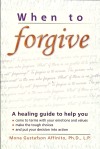
WARNING: I’M ABOUT TO GET PREACHY: I have thought of offering a workshop here at the Waters of Excelsior on “How not to spend money on psychotherapy,” the first point of which is control. The best way to avoid depression and chaos is to stop giving away one’s control. The lesson in forgiveness, for example, is to stop trying to get your offender to apologize, or to suffer, or even just beating oneself up with anger. As the saying goes, “Not to forgive is like taking poison and expecting the other person to die.” (This could qualify as a sales pitch for Forgiving One Page at a Time, the diary format of When to Forgive, now out of print.) In other words, it’s the height of loss of control to expect someone else to do the job for you. Even worse is blaming someone or something else for your problems. That seems to be the “in” thing these days, blame the person who isn’t like you, or even blame the government for which you may or may not have voted. Relying on someone else to fix it is the height of helplessness.
AND NOW I’M ABOUT TO GET PRACTICAL: My policy these days is to avoid the news and analyses after 12:00 noon, sort of like avoiding the caffein that could keep me awake. What I have observed is loads and loads of analyses, most of which seem pretty right to me. But there’s one thing I’ve observed that I think is really important. The rule of formal government isn’t the only thing that produces change. I’ll bet you don’t even remember when Down Syndrome was called Mongolism, and diagnosed individuals were essentially warehoused as hopeless. Now you’ll find them doing jobs at restaurants, offices, greeting folks at orchestral halls, performing as actors, living happy and productive lives. Same goes for people diagnosed with Autism, many of whom are sought for their special skills.
I’ll bet some of you don’t remember when a woman would never be accepted as a TV anchor, or a news reporter, or a police officer, or in the military, or as a firefighter – or you name it. Yes, I’ll grant that Title IX helped a lot, but it wouldn’t have happened without the force of people power. All that even though the ERA never passed, And have you noticed how you don’t even notice when a black person appears in any kind of role– in spite of the fact that some powers in government are working like the dickens to be sure that racism survives. My point, not every change that happens is the result of official control. Bottom line, the final force is the action of plain, ordinary people who remain alert and let their preferences be known. But only if we don’t give up! If only we maintain control where we can, whether in personal interactions, signing petitions, volunteering, offering help, expressing an opinion.
That’s my first point. Stuff happens, sometimes without our even noticing it, but it can go the way we like if we don’t yield control through blaming others or just plain giving up.
It would be great if any of you reading this would be willing to support my efforts here by offering examples.
The other day I had just hauled my right leg with its bone-on-bone knee into the front passenger seat of the car. The door itself was uncomfortably too far away from my reach to close it, so I was struggling as a pedestrian passing by smilingly and gently pushed it closer to my reach. That was a much-appreciated random act of kindness. And there were two things about that gesture that were kind. (1) He moved the door close enough so I could easily accomplish my goal. (2) He moved it just close enough so I could easily accomplish my goal.
And that’s the point I’d like to make here. Every time we offer help we are sending the message that help is needed. Sort of like the story of the boy scout who took an old lady’s arm and guided her across the street. Punch line – she didn’t want to cross the street. I don’t want to be a Debbie Downer, but sometimes helping may be an insult – like giving clothing to a poorly dressed person who, from his or her point of view, was doing just fine.
It may have been ten years ago when I didn’t yet qualify as “old-old” that a dear, kind friend of mine took my arm to help me walk to our mutual goal. Maybe it’s the Swede in me, but I didn’t like it. I still don’t like it when someone implies that I can’t do it myself. But I love that friend and appreciated her generosity, so I told her I was okay on my own and promised that when the time came I would let her know I’d like help. These days I do ask, especially for stepping off a curb. Or if we need to make progress more rapidly than is possible at my unaided pace.
I’m trying to make a point beyond my own situation here. It’s just a warning to be careful. Sometimes helpfulness is intrusive. Remember, the unspoken message is “You need help.” Offering an arm is different from grabbing an arm. Holding a door open doesn’t carry a message of someone’s inferiority. Offering to help someone struggling carrying too many packages carries the message “I’ve been there, and I would have liked help.” But maybe that person sitting alone really is longing for company. Or maybe he’s just enjoying the verbal silence.
So, let’s do something kind, not only today but every time the opportunity presents itself. Just let’s be sure it’s kind.
Just sayin’
OBSERVATIONS AT VALENTINE’S DAY DINNER
In my last blog I talked about my [delayed] birthday dinner at the RH Rooftop Restaurant in Edina. I’m trying to keep my entries short, because that’s the kind I prefer to read. So I saved this observation for today. When we arrived I noticed a table of six young women having a good time together. (“Young.” I guess anything between nineteen and thirty-five qualifies as young from my point of view. Maybe even forty-five – who knows). All I know is they were six young women sitting together having a good time. My comment to Doug? “I love seeing that. Back in my day if we didn’t have a date for Valentine’s day we sat home feeling sorry for ourselves.”
It reminded me, by contrast, of a time several years ago when our travels took us to a place where we were dining on the night of the local high-school prom. Seated there was a table of four girls with their dates. I deliberately didn’t say “four boys with their dates,” because it was so clear the guys were primarily there to make the girls dress-up party possible. To state it bluntly, the guys were clearly being used as the girls basically ignored them as they primped, giggled happily, and chatted. It reminded me a bit of Marable Morgan’s 1973 Total Woman’s advice on how to get and keep a man – an economic necessity. No skin off my nose, but I felt sorry for the guys and their somewhat lost, silent, and confused look dressed in their rented tuxes. Frankly, I much preferred today’s version, including the couples there who did, indeed, look like they were enjoying each other.
So that’s what happens when you take me out in public. Like it or not, I’ll be observing, thinking, and talking. (And I do believe Doug had a good time too.)
My son took me out for dinner to celebrate my birthday on February 14. My birthday was in October, but we never do find time to celebrate birthdays on the right date. The restaurant was my choice, so I accepted a friend’s suggestion and we went for the first time to RH Rooftop Restaurant atop Reservation Hardware in Edina. Others advised us to go early to first enjoy the beautiful furniture in the store below. I don’t know if black and white are always “in,” but that’s my preference and that’s what we got to see as we wandered through before heading for the restaurant and its beautiful chandeliers. Much as I love my own furniture, I knew it would seem schlocky when I got home. It did, for the first five minutes or so.
At the restaurant I had a glass of delicious wine, chosen from a long list with the help of the wait staff. Price, $20. That’s OK. Doug was paying and it was the least expensive. I think it was even better than my favorite red from Trader Joe’s which, served by myself at home, costs about $3.00 a glass. I didn’t need a full bottle, but one was available from the list for $363.00. To begin with, Doug and I shared a charcuterie board of prosciutto, cheese, and grapes, followed for me by a perfectly prepared petit filet (as close to rare as legally possible) with separately priced asparagus on the side. For dessert I chose a decaf cappuccino. I’ve learned to allow myself to enjoy such luxury even though my mind does go to people enjoying a shelter meal, or even dumpster diving in the cold.
So what’s this got to do with relative deprivation? Or, in this case relative advantage? Well, here goes with a couple more stories. Back in Connecticut, some twenty-five or more years ago, one of the women in my little Lutheran church was aglow with having gone out to dinner with her husband the previous evening– to Friendly’s. Google it. And I remember thinking everything is relative. There really are different levels of creature comfort and – a least those of us who are contented — choose to compare ourselves with people in comparable circumstances. About the prices in the thousands I’d seen at Restoration Hardware before we dined, I had no thoughts of jealousy, or of wanting to acquire sufficient funds to re-furnish my apartment. It was just out of my range of comparison.
And another story. Back in Connecticut I had a client who was enjoying newfound success as a contractor, loving to take friends out to dinner and buying hundred-dollar bottles of wine. Then came the recession of the time and he grieved, comparing himself to where he had been. Relative Deprivation.
By the way, I do have another Friendly’s story. One day after Lou and I had split I took myself out to lunch at Friendly’s. Absolutely thrilled! “Almost like being a real grown-up,” I thought. Or there was the time I bought myself a present of a pretty teakettle on the spur of the moment, approaching the check-out counter like a little kid at Christmas, not wondering if it would be OK with anyone else. In this case comparing myself to me, recognizing the relative deprivation I had been allowing myself to feel.
And therein lies an answer to the question, why is no one apparently concerned that a billionaire is at work cutting away funds designed to help those in need? He and those in his category are just too far out of range for comparison. And why we don’t spend much time comparing our daily lives to the very needy? It’s just plain characteristic of humans to operate within a small frame of reference. Relative Deprivation/Relative Advantage.
If I know my followers as I think I do, you’ll like this book as much as I did. So many things to ring our personal bells.
ONE STOP WEST OF HINSDALE, by Valerie Kuhn Reid
I absolutely loved this book. I loved the total honesty of the content and I loved the author’s style. If I were still wearing my psychology-professor-hat I’d be suggesting it as supplementary reading. I even love the short chapters that made it easier to set it down when necessary even though I wanted to keep on turning pages. There are so many things that vibed with me, and I’ll mention some. But I ‘m careful not to give away important things that are more effectively discovered with an element of surprise. Here goes with just a few. There’s the importance of caring fathers in a girl/woman’s life, and the influence of the first few years of life in sealing some lifelong characteristics. I know too well the potentially confining superego of a Lutheran atmosphere and the related stoicism. (I’m personally happy for friends and therapy that helped relieve me of that restrictive tightness.) I know – and eventually taught – the depressing “Problem That Has No Name” that stunted the lives of women of our mothers’ generation for which the treatment varied from horrifying to stupid. I recognize the role-reversing protection of one’s mother. I have also seen the crazy-making of alcohol addiction in reaction to situational stress. I felt the intense sadness of a family torn apart and the relief of forgiveness. And I certainly identified with the salvation of owning a brain that needs feeding and activity. I feel that I really “know” the author now, and I can’t imagine that wouldn’t be true for anyone who chooses to read this book, which obviously I highly recommend.
I am a Democrat and I really want to help, but I can’t afford to waste my money on ineffective commercials and interviews. For some reason that I do understand, (but don’t like), no one wants to hear my psychologist’s eye view. But here goes anyway
Reason Number One: People want to see strength in their leaders, and we in the US live in a society that equates strength with masculinity. So electing a masculine person to office is a no-brainer. And Masculinity, for fairly obvious reasons, is equated with maleness. Therefore females still don’t qualify in our culture. Besides we have a long history of thinking in terms of opposites, especially opposite sexes. So, the assumption goes, if men are strong, then by definition women are weak. So women are out because they are seen as the “opposite” sex, i.e. weak as opposed to strong. Moreover, our frontier culture tends to think of strength in terms of physical ability so the support of violence in language and actuality feels good. And the elderly are out because, quite literally, aging does reduce physical strength.
To tell the truth, I think it would be fun to sit with some Ad men and turn some of that information around to appeal to folks who want to see good stuff get done.
Reason Number Two: There is another strong side to the US culture. We see it in the daily stories of people rushing to the aid of their neighbors. Physical strength is good, but so is the strength of shared community, kindness, gratitude, forgiveness, and peace. I waited during the whole campaign to see stories of real people suffering or enjoying victories. Instead I got numbers and generalizations. I’m not a political scientist or politician, but I do know about jargon and I often find it boring. In this election the opposition did a great job of using plain, ordinary language and applying it to things folks care about in their personal lives. But what I saw in Democratic commercials were jargoned intellectual arguments – boring (and effeminate?). How about stories of effects on real people, like women suffering the agony of pregnancy denied the aid that health workers are not allowed to give, or mothers trying to find an apartment they can afford with the two jobs they hold down while raising three kids, or the joy in a child’s eyes when being recognized for something they did well, or the grief in losing one’s home to flood or fire. It’s an old rule in creative writing, “Show, don’t tell.” Make me see what it looks like when people in poverty suffer expensive illness because they’ve been denied regular preventive care. Tell me the stories of the people and families seeking shelter on our borders. Give me a reason to see the very real strength in seeing the positive that can be done. Don’t just leave me with the opposition’s lies told with confidence – no ifs, ands, or buts — denigrating other people. Most folks don’t really get excited by explanation of the process of scientific method or polling procedures. Show me.
Oh my gosh. Do I really dare publish this? I guess so … I can’t just sit around and watch tragedies happen.
SURVIVING THE HARSH SEASON
One of the things I enjoy here at the Waters of Excelsior is the weekly writing group. This week the question to be addressed was “On these days, how do you kindle the fire inside of you? What keeps you going, warms your spirits, and insulates you from the creeping chill. What lines have the power to comfort and warm your heart.” The following is what I presented in the midst of beautiful presentations about warm fireplaces and playing in the snow.
I know I’m supposed to write something sweet and heartwarming here, but I can’t get past the metaphorical storm brewing day and night and promising a long stay. Outside my consulting room in Connecticut I used to have shelves of books available for borrowing. One title has stuck in my head over the years, waiting, I guess, to come back to say it for me now. “The opposite of Everything is True.” (William A. Crisman, January 1, 1991). Around the world there’s starvation, flooding, burning, warring, killing, even suffering for lack of gynocological care. When something goes wrong it is always someone else’s fault for which the best treatment is insult, destroy, kill. If I were still wearing my professor hat I’d have to watch my back, because the very things I’d teach are declared illegal by those in power. For Empaths like me the pain is intense. OK, I’ll stop before I become a Debbie Downer, the exact opposite of what I want to be.
So how do I ignite the positive fire that insulates me from the creeping chill and sleepless nights? At least six ways. (1) I know the route we’re on leads eventually to a new world of community care and love. In the meantime (2) I treat the news like caffein – avoid it after noon. (3) Support the news outlets that aren’t owned and controlled by the billionaires. (4) Sign appropriate petitions. (5) Do my best to follow the Rabbi from Nazareth who gave his life to teach us the way of love; and (6) open myself to spread love like a virus.”
Of course I’d love to hear your reaction.


 monagustafsonaffinito