Archive for the ‘Uncategorized’ Category
I just finished writing a review of our Excelsior Water’s book club’s latest choice, James McBride, The Color of Water. There are so many things I promise I’ll write about, and put off, but today I screwed up my courage to share a book review that reveals probably more about myself than is wise.
It would be superfluous, even maybe pretentious, to write a long review for a book that’s been reviewed almost 11,000 times. But I would like to share my reaction -about stereotypes. I admit I was always pleased when I had Jewish students in my class. I believe without exception they appreciated learning and thinking, playing with ideas, often creatively enjoying the arts, dedicated to learning beyond a basis for establishing a paying career. I firmly believe it’s an integral part of Jewish heritage, even for a woman whose experience in her own Jewish family was bitterly negative. It certainly was evident in her skill at finding free cultural experiences for her large growing family and affordable ways to see them (and herself) through excellent schools, even graduate schools and outstanding careers.
I also enjoyed the very personal demolition of stereotypes about poor black folks. Her experience with her black husbands, family, and friends was outstandingly welcoming and supportive – even loving — in spite of other people’s confusion about where she “belonged” on the color chart. A bit of mutual distrust and rejection of people of a different color, even as she apparently sometimes almost passed for black.
Beyond stereotypes, there’s no doubt that Ruth McBride Jordan was herself beyond stereotypes. What she accomplished through her home life was so much more than most. Being a bit OCD myself, I was almost jealous of her ease in dealing with the chaos of her large family, and the almost military assignment of leadership based on the birth position of her children.
Maybe most of all I admired the author’s description of his own young manhood and the career he eventually created for himself out of the chaos. I loved the accounting at the end of the universal successes, though different, of his siblings. It’s fun, as a psychologist, to play with the elements of each person’s self-construction.
Mostly, there’s no doubt the author’s mother was an exceptional human being, worthy of her son’s loving tribute.
My long-departed brother Harvey, eleven years older than I, might be called a grammarian. His ear was attuned with perfection to the spoken and written word. Even as I write this I wonder where he might have edited my first sentence. But he was also sensitive to the understood meaning and sound of words, so his conversation was always attuned to the language of the person/people he was with. He knew that language conveyed much more than information, bearing the burden of expressing emotion, attitude, even judgment and elitism. In other words, his choice of words conveyed respect. I think of him often now as I read article after article suggesting reasons why the most recent elections went the way they did. I understand the accusation of elitism as I find myself wondering what such words as the following really mean: liberalism, neo-liberalism, populism, oligarchy, conservatism, progressivism, hegemony. I find myself asking why folks can’t use plain and simple language. And then I realize they think they are. Every one of those words, and others mentioned here, carries a slew of meaning – to the people using them. They’re jargon. Well defined meanings well understood within the circle that uses them
How do I know? Because I use psychological jargon. I talk about the jargon effect in my current hope-to-become-a-book manuscript. For example, try behavior, behaviorism, subject, stimulus, conditioned stimulus/response, unconditioned stimulus/response, generalization, discrimination, extinction, spontaneous recovery, control, conflict, depression. They sound like “real” words, but what do they mean when one of “us” uses them? Do others hear what I assume they mean?
Or what if I had gone on to major in English? Would I immediately understand words like global anglophone literature, fragmentation, discontinuity, narrative form, perspective, protagonist, realist, verisimilitude, syntax, core narrative assumption.
So here’s my plea, and my plan. I didn’t major in political science, or literature, or you name it. But I spent a lifetime learning and teaching psychological jargon. So let’s try to translate our language into clearly understood “real” words that won’t raise the “this is elitism” hackles of the listener.
I consulted with a few friends about the appropriateness of publishing my Holiday letter, and we all agreed — I’m old enough to get away with it. I don’t have to worry about my resume, and I think my reputation is sufficiently solid. I know this contains no pornography or even indecent language. So I should be good to go. Enjoy! Or not, as the spirit moves you.
MONA’S LETTER
As I write this it’s 3:55 p.m. here at The Waters of Excelsior in Minnesota and night is about to fall. Have you noticed that, at this time of year, it really does fall? In a few minutes I’ll turn on my Christmas lights ready to greet me when I get back from walking the halls for a half hour. (I have to keep my phone happy by completing its red circle. I don’t know how my phone knows what I need to do, but it says I should, so I will.) Anyway, to get to the point. I’m beginning to receive Holiday greetings from kind and timely friends, so I guess it’s time for me to roll my own news off the presses. And yes, I do have a bit of news.
Activities: I’ve been involved in the establishment of a Resident Council here. It seems that our first order of business has been to examine and encourage improvement in the way newcomers are welcomed. I think you know I’m an oldster here, in more ways than one, having moved in at the very beginning — December, 2018. By now we’re basically fully occupied with a waiting list of those who want to join us. I continue to find it a wonderful way to live, like being on a perpetual cruise without the potential for rough waters. I also enjoy the weekly meeting of our poetry/writer’s group here, expected to produce something to share every Friday. Most Thursdays I’m also in attendance at the Bible Study group currently led by Pastor (and musician) Mark Abelson from Mount Calvary Lutheran Church. Not always, though, because when son Doug is around there are many days when I’m off to various conflicting entertainments: The Guthrie Theater, Saint Paul Chamber Orchestra, Minnesota Orchestra, Cantus, The Bach Society concerts, and probably other things that are slipping past awareness right now. Oh yes, I should mention that I’m enjoying being the Correspondent for the Connecticut College for Women class of 1951. I didn’t like finding no news about us in the college magazine, as if we were gone and forgotten, so I volunteered. You do have to move pretty far into the back of the section to find us, though. I’m involved, too, in establishing a writer’s group at the Southshore community Center.
Travel: August saw son Douglas and me spending fourteen days cruising with Viking’s Octantis down the Great Lakes. It’s the same expedition ship we were on last year in the Antarctic. The difference from typical cruises is exemplified by the chemistry-classroom-like auditorium with lectures and documentaries on the broad screen up front instead of a performance theater. I don’t get to gamble, but I do satisfy my brainiac self while enjoying a cappuccino without having to pass a test at the end. While Doug takes advantage of every off-ship excursion he can fit in, I’m happy to stay on board most of the time. But I did enjoy the visit to the Ford Museum in Detroit. Wow! Those presidential limos are much longer than they seem when they appear in the news. And I enjoyed sitting in the seat that Rosa Parks had occupied on the bus when she refused to move to the back. Next year we’ll be anticipating a 2026 cruise to the Arctic on the Octantis’s sister ship, the Polaris. But, if all goes as planned, before that, in August, we’ll be cruising Viking up the Mississippi from New Orleans to Saint Paul, assuming there’ll be enough water in the river. Finally, I should mention that I did not renew my license to practice at the end of May, but, based on my academic and writing credentials, I am still available for tutoring and consulting.
Writing: Closest to my heart is working on a manuscript, intended to be a book if I can make it through the search for a publisher. Its initial title was On My Way Out, the personal story of my career in psychology with lots of tales of events along the way as the years and psychology changed. For example, My conditioned response reaction to Vaugh Monroe’s Blue Moon at the romantic high school after-prom party. But I changed the title to A Healthy Woman Was a Crazy Person when I realized how contemporary the ending was as men are now dealing with their “problem that has no name” in reaction to the success of the women’s movement. I’m available to share more info about that – eager, actually.
Summary: To tell the truth, I’m glad I’m on my way out. I’m so grateful for all the blessings I’ve received along the way, but I’m in no rush to close the door behind me. There’s just too much left to accomplish and enjoy. I have no doubt we’re entering a period of historically significant and probably startling change. I hope for all of us that what lies ahead will come to reflect the message of love we celebrate in this season displayed in the growth of kindness, gratitude, generosity, forgiveness, justice, and peace. In the meantime I’ll try to do my best.
Mona
No, it doesn’t mean to restrain your feelings and thoughts like captives in your own private prison. It means having a thorough understanding of yourself and willingness to be open with others given appropriate methods and situations. And I’m about to expose you to my private example.
I think being raised Swedish had something to do with it, but I thought that the Scandinavian brand of stoicism was heroic. Looking back, I think it led others in public school to think I was “stuck up.” I know it must have frustrated my parents when my response to being sent to my room in punishment was a toss of the head and a gesture indicating that I loved being alone in my room. I guess it’s supposed to make one seem superior as one who is insensitive to pain.
At any rate, the effort to train me to experience myself was begun by a friend in the Masters Program at Boston University who pointed out – basically nagged me about — the automatic gate that shut somewhere around the throat level preventing a head and body connection. I’ve told the story in other places of my excitement in teaching a course sometime later at the University of Vermont when I felt myself blushing in a lecture about masturbation.
But there are other stories, liking meeting a very attractive, well-organized therapist who admitted she tried to teach her clients to be like her. I came away from that meeting hoping never to run into her again. No vibes. Her emotional life seemed to be locked away far inside where one couldn’t access it.
On the other hand, there’s the experience in the neighborhood where Lou and I raised our two children. It was a suburban setting where many back yards came together essentially providing one large playground where we could feel safe about letting our kids enjoy their own creative games. One woman, I’ll call her Mrs.X, lived directly behind us, and we enjoyed coffee together on occasion. As a matter of fact, she’s the one who taught me to clean the toilet tank on a fairly regular basis. Her little boy was about my Lisa’s age and part of the playgroup that gathered on sunny days.
Then came the day, several months after the birth of Mrs X’s daughter, that I was hanging a load of laundry on my pully line. (I loved my pully line) when I noticed the ladies in the neighborhood sitting in her yard, chairs situated so they were all facing me. I waved, and they waved back, calling me after they returned home to ask why I wasn’t there – I hadn’t been invited. Just a sign of things to come. But what did get to me with a huge gush of pain was when she bought exciting toys for her yard which had attracted the children in the neighborhood. When my Lisa, about four-years-old, ran over happily to join them, she was told to go home. She wasn’t allowed to play in Mrs. X’s yard. Of course, my Lisa cried in hurt and wondered what she had done wrong to cause the rejection. I wondered too.
I still believed that any problem could be solved by talking about it, but Mrs. X would have none of it. Lisa (and apparently I, also) was banned from her attractive playground of a yard. All I can do when I think about it is imagine how it was for little black kids rejected because of their color and grieve for the sad experience it was for Lisa.
I can’t remember for sure, but I think Lisa’s big brother and the neighbor kids made a point of including Lisa away from Mrs X’s yard, but the rejection and sadness went on until one day – and this is the point of the story – I blew my calm, cool, collected (?) stack and stood on my porch shouting every insulting obscenity I could come up with. Mrs. X just calmly looked at me like I had gone crazy. Well, maybe I had. Maybe it teaches something about how situations can drive one to otherwise unacceptable behavior. But the victory came when my two kids came running to me and I realized how important it was to them that I had stood up for them. Yes, that disconnect between emotion and action had been weakened.
I don’t recommend frequent such tantrums.
The situation with Mrs. X and Lisa, however, didn’t change. I thought we would have to sell and move, but unfortunately the town had allowed our lots to be approved even though they were basically red rock. Truth was, everyone in the neighborhood had a septic problem. Some overflowed into yards, or others, like ours, backed up into the basement. (We threw the dishwater and bathtub water out the back door, practiced minimal flushing, and let the washing machine water out through a hose running down the driveway.) In other words, we couldn’t in good conscience try to sell the house. I remember the feeling of being stressed and trapped. (Sound like any other more unfortunate neighborhoods one may talk about?)
There is a happy ending to this story, though I think my Lisa is still affected by the trauma. The town finally put in an appropriate sewage system and Mr. X was transferred out of town. Four of my very favorite people moved in, with one for each of us – Mr. V for Lou, Mrs V for me, a son (still friends) for my Doug and a daughter Lisa’s age.
All this to say that self-control doesn’t mean denying one’s emotions by sealing them away in one’s own dark, closed closet.
And, for heaven’s sake, I hope you don’t think I’m advocating temper tantrums!
By the way, in reference to conditioned responses, we still feel a certain nostalgia when driving through neighborhoods with certain familiar distinctive smells.
I’m not a political scientist or a politician, but I am a voter, and I do know some stuff as a psychologist that can be of practical help in decision making on both the macro and the micro level, i.e. in making choices on both the social and the individual level. If you’d rather not put up with this intrusion you should, of course, feel free to ignore this posting. Or you can read and respond with hints on how I might do better.
Today I’m choosing to focus on “control.” In my opinion it’s absolutely the most basic issue for reducing stress and increasing health and happiness. For today it’s directed to people who enjoy at minimum a home with comfortable temperature, a stocked refrigerator, food preparation (or service) facilities, a comfortable and safe place to sleep, sufficient and attractive clothing, and a secure sense that there will continue to be enough money to support a comfortable lifestyle. Throw into the mix access to good health care and a generally secure environment and you have one of those “normals” they talk about. In other words, I’m talking about people like you and me keeping individual stress at a minimum by taking control.
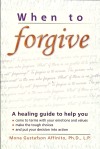
But now I wish I were so computer savvy that I could set off firecrackers as a warning that “control” is a really hot issue! I think of it as the ability to regulate, rule – oneself, because there’s really no way any of us can control another while there’s lots of ways we can admit them in to control us. I learned this in spades while studying and writing about “forgiveness.” Put simply, I learned that refusing to forgive an offender left them in charge of our lives. Just to “blame” and leave it at that leaves it up to the “blamed” to fix my life. What better example of losing control than to hang it on the actions of someone else?
Is it safe to say that taking responsibility puts me in a position to look at what I did and can do differently? It puts me in control. I find it works for me to do that with anger. Don’t get me wrong, I know when the other person (or situation) is wrong, but what’s causing me pain is my own anger. OK, so why can’t I let go of the anger? Am I angry with myself? What did I do to bring on the situation? Or what did I do or not do in response to it? Often I discover I was a wimp and start working on myself to find ways to respond differently the next time it happens. Or maybe I made the mistake of using the “you” word evoking a hurtful response from the person I offended. Wherever I go with it, I’m working on the one person I can control: myself. Sometimes I even conclude I can work at loving the offender. Maybe they’ll feel better, but mostly I will.
I’m stopping here for now with the rule “The only person you or I can control is ourselves.”
(Sure, maybe hogtying or shooting or locking in a closet could control someone else, but I’m not capable, and I doubt it would really increase my own sense of control and happiness.)
p.s. I had a lovely Thanksgiving day at our North Shore retreat, thankful for all the personal blessings I’ve received right from the get-go. I hope you had much to be thankful for too.
My manuscript/memoir, A Healthy Woman Was a Crazy Person: A Psychologist’s Personal Journey, led me to a conclusion I hadn’t anticipated when I started writing. Remember how the recent decades of the quite successful women’s movement began with an exploration of “The problem that has no name?” Now many young men are facing their “problem that has no name.” as their previous primary relative position has fallen. The financial aspect is strikingly illustrated in the October 26, 2024 “New York Times,” article, They used to be ahead in the American Economy, Now they’re fallen behind, by Emily Badger, Robert Gebeloff, & Aatash Bhatic,
I have no doubt that relative deprivation contributed to the results of our recent election. I also know that we Americans tend to think in terms of “opposites” with the belief that “If one group is up, the other must be down.” I’ll stick my neck out and say I suspect that way of thinking has played a large part in the current movement to ban abortion just as it has in the various “isms” that separate us. But those role restrictions don’t have to prevail and trap anyone, no matter what their gender, in social prisons that deprive one of fulness of life.
I know, too, that while it isn’t making the headlines, there is major concern and research going on into the positive influences of generosity, gratitude, kindness, forgiveness, and related routes to happiness. Even local TV programming seems to make a point of at least one kindness story before signing off. To tell the truth, I think those are the strengths that will ultimately overcome the unhappiness, disappointment, and dissatisfaction so many of us are feeling.
Okay, so I’m talking like a Social Psychologist. Of course I am, That’s who I am! Glad of it, and aware that what we have to offer is powerful when heard.
I think I’m including the graphic illustration from the article to which I’ve been referring. That red line tells us something very important about where we need to go as a people. On the other hand the magic of the Internet might erase it from this document before it posts on my blog. If that happens, please Google the original article.

Just my opinion, but it seems to me we acted like a democracy. People really cared and came out to vote. Now it’s time to add honesty back into the mix and I’m thinking that may happen. The misinformation has served its purpose. The goal has been achieved. Now I hope we’ll all get on the stick and exercise our people power by paying attention to our real problems.
I wish I had the youth, energy, knowledge, training, expertise, and wherewithal to establish a truth commission, but I’m hoping others will do that. And I hope they’ll start with the truth about who’s arriving at our borders – like stories of families escaping terrible situations at home, hoping to save their kids and themselves. Then I hope we’ll get on a freedom search and get out the information about what banning books really does to damage our kids. And the life-saving issue of abortion choice as it affects not only the hosts of the embryos and fetuses but also the products of forced birthing. And how about the floods and fires related to climate change. Maybe we can take all that stuff and more out the political denial/distortion mix and get busy focusing on real problems.
Maybe the truth distortions have served their purpose and we can flick the switch to the “On” position, on to the search for real problems and real solutions. Maybe we can give up on the idea of letting someone else do it and get busy being aware and active ourselves. But that won’t work if we sit back, relax, and leave the work of destruction to the powers that be.
Just sayin’
I just read an article about people who paid thousands for a Vacation Plan. (I won’t say which one. I might get sued.) Basically, they said, they had been sold a bill of goods. When they went to use it, they found they couldn’t collect on what they thought they’d bought, but they are still committed to the payments they signed for, using up the money they could have used for future vacations.
I’m writing this because it reminded me of the number of people who took out major loans because they were sold a bill of goods that exaggerated the advantages of having a piece of paper that said they had a college degree. It’s like mortgaging one’s future to buy a house unseen and finding it’s a dilapidated fixer-upper. As a former professor, I was dismayed when I saw the sales pitch because I know the difference between correlation and causation. I know it’s true that people with college degrees traditionally have better incomes, even better wealth. But I also know there are many factors involved, including the prestige of the school, the people of power one meets, the problem solving skills one develops, what career skills one actually learns, even what one’s economic position was to begin with. I knew that too many people were going to get stuck paying off loans without the incomes they had counted on receiving.
At one point I was supervising a PhD who was seeking licensing. One thing she was doing for extra money was teaching a psychology course for one of those degree programs advertised on TV. We were both horrified by the syllabus she had to work with – from Pavlov through Freud and Carl Jung, and everything in between, measured by answers to multiple choice questions, all in one semester! I don’t know the data for success of the students who paid for a program like that, but I’m darn sure they didn’t end up making the thousands of a graduate from Yale or Princeton. I hesitate to add, not all such programs are as bad as that one, but it is an example of paying for a bill of goods.
And now there are folks who are stuck with paying for the ramshackle, close to worthless house, limiting their options to start a family, buy a home, even spend money on better educational opportunities. Consider moves to forgive that loan, like the mortgage on an unlivable house. I hear too many people saying things like, “They took out the loan; they should pay it back. That’s what I did when I took out a mortgage. I never asked to have the loan forgiven.” Or something of that self-righteous ilk. But what would you have done if you found you’d been sold a bill of goods? That the house you hadn’t seen before you paid for it was a disastrous fixer-upper? That the promise of possessing a piece of paper called a college degree would put you in league with the top dollar earners and it doesn’t work out that way, no matter how hard you try?
At any rate, I hope it’s obvious that I’m arguing for loan forgiveness when someone has been sold a bill of goods. It couldn’t hurt the economy to have that money freed up for personal, family, and economic growth.
OK. Please have at it in the comments!
I had hit 70 straight wins, setting an ultimate goal of 100 (only 30 more days to go). Then, darn it, came one of those where you get the last four letters right on the third try with lots of possible first letters to make a word. And, guess what, I tried the wrong first letters on the last three tries until I lost. And that was my teaching moment. Well, it’s what I would have tried to turn into a teaching moment if I were still teaching. I could physically feel the energy draining out into a kind of “why bother” attitude.
It was a demonstration of an approach gradient in action. “Approach gradient?” If I could do anything more than just write words on this blog, I’d draw a picture. Or even find one to copy. But I haven’t been good at extra stuff ever since they made the blog system “easier?” a few years back. So please picture this with me. (Or skip the next paragraph if you don’t like imagining graphs, even simple ones.)
First there’s the horizontal axis, the bottom line, representing the distance from the goal, in this case the number of tries (one per day) starting in the left-hand corner. Straight across, 1-2-3-4-5-etc to 100. And then there’s the vertical axis, heading up from the left-hand corner representing the strength of the desire to reach the goal. You might call it the enthusiasm for getting to 100. Intro Psych tells us the enthusiasm measure will rise as one gets closer to the goal (of 100). In other words, the intensity of the desire to reach the goal increases. OK. So now picture that suddenly at try number 71 the line flops down to zero, necessitating starting all over. Enthusiasm drops to zero, or close to it.
You don’t really need to picture an “approach gradient.” Just see that, having made my way steadily and eagerly toward 100, I was suddenly – thud — back to zero. I failed. It didn’t help much to blame the game creator. I’m the one who didn’t get the right answer. My upward journey was stopped. And I could feel my enthusiasm drop. It really felt like a physical thud. Oh yes, I played Wordle again the next day, but I was in a “don’t-really-care-very-much-if-I-don’t-get-it” mood.” That “thud,” and the “I don’t really care that much,” reminded me of the many people who don’t find energizing success anywhere. Like kids in school whose interests and skills are not identified or encouraged. What a loss! I’m talking about the failure to encourage some among us to appreciate the gifts they can use and give. And then we’re surprised that they just kind of “hang out” their lives, or, worse still, revert to socially undesirable things like drugs, or bullying, or violence of other forms.
And that’s just referring to people who aren’t encouraged. Worse still are the kids who live in atmospheres where punishment and shaming are used in the attempt to drive them to socially acceptable behaviors. Ridiculous, really, when the function of punishment is to stop action, not to encourage it.
I lost on Wordle and was reminded of the approach gradient and its importance in encouraging the living of life. I’ve been fortunate to have abilities appreciated for most of my life, so I find it fun to try again. But that’s not true for too many people. And then we call them lazy. I don’t believe in lazy.
Do you remember it? Talks, workshops, bumper stickers, T-shirts?
If you do, or even if you think it sounds interesting, please send me an email at forgivenessoptions.com with “Healthy Woman” in the subject line.
Thanks,
Mona