Archive for the ‘control’ Tag
At some point every night, later rather than sooner, I wake up thinking of so many reactions I’d like to share in what seems like a topsy turvy world. I’ve been in this state before at several points in my life. That’s why I like watching historical documentaries about recent decades, because I know how they end. This one, though, not so much. It’s so complicated, and my scope of knowledge is so limited. I might have been a Political Science major, but I wasn’t. Economics would have been interesting, but it wasn’t my focus. The only place I have a right to claim any authority is in Psychology. I think it’s appropriate to take it easy on myself – and maybe you – and break down some of my reactions into smaller chunks. Easier to get back to sleep. So I choose to focus first on the issue of control
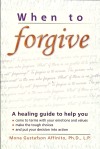
WARNING: I’M ABOUT TO GET PREACHY: I have thought of offering a workshop here at the Waters of Excelsior on “How not to spend money on psychotherapy,” the first point of which is control. The best way to avoid depression and chaos is to stop giving away one’s control. The lesson in forgiveness, for example, is to stop trying to get your offender to apologize, or to suffer, or even just beating oneself up with anger. As the saying goes, “Not to forgive is like taking poison and expecting the other person to die.” (This could qualify as a sales pitch for Forgiving One Page at a Time, the diary format of When to Forgive, now out of print.) In other words, it’s the height of loss of control to expect someone else to do the job for you. Even worse is blaming someone or something else for your problems. That seems to be the “in” thing these days, blame the person who isn’t like you, or even blame the government for which you may or may not have voted. Relying on someone else to fix it is the height of helplessness.
AND NOW I’M ABOUT TO GET PRACTICAL: My policy these days is to avoid the news and analyses after 12:00 noon, sort of like avoiding the caffein that could keep me awake. What I have observed is loads and loads of analyses, most of which seem pretty right to me. But there’s one thing I’ve observed that I think is really important. The rule of formal government isn’t the only thing that produces change. I’ll bet you don’t even remember when Down Syndrome was called Mongolism, and diagnosed individuals were essentially warehoused as hopeless. Now you’ll find them doing jobs at restaurants, offices, greeting folks at orchestral halls, performing as actors, living happy and productive lives. Same goes for people diagnosed with Autism, many of whom are sought for their special skills.
I’ll bet some of you don’t remember when a woman would never be accepted as a TV anchor, or a news reporter, or a police officer, or in the military, or as a firefighter – or you name it. Yes, I’ll grant that Title IX helped a lot, but it wouldn’t have happened without the force of people power. All that even though the ERA never passed, And have you noticed how you don’t even notice when a black person appears in any kind of role– in spite of the fact that some powers in government are working like the dickens to be sure that racism survives. My point, not every change that happens is the result of official control. Bottom line, the final force is the action of plain, ordinary people who remain alert and let their preferences be known. But only if we don’t give up! If only we maintain control where we can, whether in personal interactions, signing petitions, volunteering, offering help, expressing an opinion.
That’s my first point. Stuff happens, sometimes without our even noticing it, but it can go the way we like if we don’t yield control through blaming others or just plain giving up.
It would be great if any of you reading this would be willing to support my efforts here by offering examples.
I’m not a political scientist or a politician, but I am a voter, and I do know some stuff as a psychologist that can be of practical help in decision making on both the macro and the micro level, i.e. in making choices on both the social and the individual level. If you’d rather not put up with this intrusion you should, of course, feel free to ignore this posting. Or you can read and respond with hints on how I might do better.
Today I’m choosing to focus on “control.” In my opinion it’s absolutely the most basic issue for reducing stress and increasing health and happiness. For today it’s directed to people who enjoy at minimum a home with comfortable temperature, a stocked refrigerator, food preparation (or service) facilities, a comfortable and safe place to sleep, sufficient and attractive clothing, and a secure sense that there will continue to be enough money to support a comfortable lifestyle. Throw into the mix access to good health care and a generally secure environment and you have one of those “normals” they talk about. In other words, I’m talking about people like you and me keeping individual stress at a minimum by taking control.
But now I wish I were so computer savvy that I could set off firecrackers as a warning that “control” is a really hot issue! I think of it as the ability to regulate, rule – oneself, because there’s really no way any of us can control another while there’s lots of ways we can admit them in to control us. I learned this in spades while studying and writing about “forgiveness.” Put simply, I learned that refusing to forgive an offender left them in charge of our lives. Just to “blame” and leave it at that leaves it up to the “blamed” to fix my life. What better example of losing control than to hang it on the actions of someone else?
Is it safe to say that taking responsibility puts me in a position to look at what I did and can do differently? It puts me in control. I find it works for me to do that with anger. Don’t get me wrong, I know when the other person (or situation) is wrong, but what’s causing me pain is my own anger. OK, so why can’t I let go of the anger? Am I angry with myself? What did I do to bring on the situation? Or what did I do or not do in response to it? Often I discover I was a wimp and start working on myself to find ways to respond differently the next time it happens. Or maybe I made the mistake of using the “you” word evoking a hurtful response from the person I offended. Wherever I go with it, I’m working on the one person I can control: myself. Sometimes I even conclude I can work at loving the offender. Maybe they’ll feel better, but mostly I will.
I’m stopping here for now with the rule “The only person you or I can control is ourselves.”
(Sure, maybe hogtying or shooting or locking in a closet could control someone else, but I’m not capable, and I doubt it would really increase my own sense of control and happiness.)
p.s. I had a lovely Thanksgiving day at our North Shore retreat, thankful for all the personal blessings I’ve received right from the get-go. I hope you had much to be thankful for too.
At this point in writing my father’s story, I am deeply immersed in the years 1910 – 1912. Before my father went off to college supported by the money he had saved working for two years on a job he didn’t like. Before the first World War that killed his first – and maybe only—best friend and Best Man at my parent’s wedding (June 6, 1917.)
Some few people in Forestville/Bristol Connecticut were buying cars, enough so there were six automobile dealers and retailers listed in the city business directory. He walked to work past private homes whose green lawns were enhanced by gardens of asters and chrysanthemums. On Sundays he walked to Bethesda Lutheran Church to participate in the Swedish service, singing in the choir, having practiced there on Wednesday evenings.
I imagine peace, quiet, and hope when I spend time there. But on 9/30/1910, three days after my father arrived in the United states, the newspapers reported a terrorist bombing of the Los Angeles Times. Twenty people were killed. The source I read didn’t give any details about the bomber or motivation for the carnage. But it awakens me to the fact that we have never been without terrorism.
So what would my father have to say today if he were here about the most recent terrorist attack? Maybe that’s when he’d say of his life, “I’m glad I’m on my way out.” I know he’d feel sadness, dismay, and probably disgust that people or groups choose killing as a way of solving problems. I’m quite sure we would be discussing it at the dinner table, searching for possible answers.
I know he wouldn’t jump to conclusions about motive, while he would relate it to the spate of killings to which we have, sadly, become accustomed. I know he wouldn’t scapegoat.
Was the Orlando attack part of an organized plan by an organized enemy? Apparently not, according to FBI reports. Was it hatred of the LGBT community? Was it the perpetrator’s personal illness – bipolar disorder? Was it the killers confused battle with his own sexuality? Was it a combination of some or all of the above?
Whatever lay behind the horror, he’d know it can’t be explained by simplistic assumptions. He’d worry that some might not understand how complex the situation is and would choose to rush into inappropriate reactions. My father wasn’t opposed to emotions, but he did favor rational consideration when it comes to understanding and responding.
Looking over all the terrorist attacks, domestic or externally motivated, from Columbine to now, he’d see, as we can’t help but see, that the one common denominator is not only the use of guns, but more basically the choice of violence.
On today’s news I heard that investigators are suggesting a psychological factor uniting them all – that the killer(s) were trying to gain control. My father’s youngest daughter (me) finds that highly reasonable. Having control over one’s own life is basic to being fully human. To oversimplify, it comes from expressing one’s own individual abilities and strengths and feeling rewarded and respected for them. When one doesn’t receive that gift through life situations or genetic givens, then shame may encourage debilitating depression, or, with more energy, blaming and gaining control over others. Demagoguery is one control route, but not for all. Enslavement is another, as is killing, whether organized or individual.
I think my father would say we’d better be careful before rushing to violent conclusions of our own, and take a look at the complexity of life under any circumstances, but certainly in a democracy. It may not be immediately satisfying, but solutions that stick in the long run usually aren’t quick and easy.
When, as in my last post, I advise people to avoid using “you” because it is so blaming, I encourage the use of “I” because it is honest. But just like the pitfalls related to “you,” there are hazards in using “I.”
Consider when I say, “You make me feel so angry.” It’s good to recognize a variant on the thought attributed to Eleanor Roosevelt. “No one can make you angry without your cooperation.” It’s more honest to say, “I feel angry when you say/do things like that.”
It’s that basic issue of control again. “I” am the one responding with anger. “I” can decide how to handle my anger. “You” can control what you do. “You” can decide to refrain from such behavior in the future in order to avoid contributing to my angry feeling. Or you can choose to decide that I’m being ridiculous. Or you can realize that what you said/did was appropriate, and maybe there’s some conversation needed between the two of us. Or whatever. The point is, “I” am responsible to myself and “you” are responsible for “you.”
Whenever “I” hold you responsible for my reactions, “I” am not only being dishonest; “I” am ceding my power and control to you.
As a general rule, I prefer the “I” word.
But, of course, there are other things to consider. “I” can be a very selfish word when it attempts to turn the focus of attention on “me” and away from “you.” Consider a few examples. There’s the sympathetic listener whose first response is, “Oh, I know just how you feel.” — No, you don’t!
Or maybe there’s the “sympathetic” response that goes like this. “Let me tell you about my accident/operation/breakup/whatever.” No, I want you to listen to me! I’m hurting and I need someone to hear about me. When you start your “I” comments, you are not showing support for me.
Another example of the undesirable use of “I:” We’ve all experienced it, I’ll bet, like when we have – or overhear – a conversation between two people on a date and one person is doing most of the talking, with lots of “I”s.
So yes, “I” puts the focus on the speaker, with all the aspects of honesty and control mentioned at the beginning. Or “I” puts the focus on the speaker with little concern for the “you” of the other person.
For all these reasons, I developed the practice when teaching a class never to ask “Do you understand?” (potentially blaming) But rather to inquire, “Have I made myself clear?” (acknowledging my responsibility as teacher/lecturer.)
Whew! “I’m” finding it hard to make my point clear. Only “you” know whether I have.
I’ve been promising to present some “rules” of therapy – no charge. So here’s the first one. No doubt some can be applied in a broader sphere, like maybe government, war, and politics. But discussion here is limited to our personal/interpersonal lives. I call them shards, because I’m really just offering pieces that suggest something larger and more complete. And besides, they have sharp edges that require careful handling.
Rule #1: The only person you can control is you.
This is basic. It starts at the very beginning – the need to make life predictable – to get it under control. I could easily get lost here in a long review of Developmental and Social Psychology but I don’t feel like doing that. I’ll acknowledge that how we go about controlling is strongly influenced by the way we are raised. Here, though, I just want to point some ways we get it right, and some ways we stray. I’m hoping many of you will make comments about the how and the why based on your own experience and understanding.
Let’s consider a couple who seek therapy. You can place bets that it will start out with each one trying to change the other, mostly by telling the partner how he or she should be. No surprise, it doesn’t work.
Oh, maybe you can influence the way the other person acts. Browbeating, bribing, passive aggressive words and actions, financial control, violence – other forms of bullying or abuse. In that sense, I guess I’d have to admit that the other person can be controlled. Look a little deeper at the couple, however, and it’s clear those things aren’t getting what the controller really wants; confidence in the partners faithfulness or love or admiration or respect, or …
And the chances are good the restrained one would find a way to strike back, Or maybe become something less than what the controller was expecting.
What does often work is to change one’s own behavior to evoke a different reaction from the other. Basically, this is the object of mediation. Funny thing, though, that starts with changing oneself. Back to the rule. The only person you can control is yourself.
That kind of change requires honest listening. But it won’t work if the person you’ve been listening to is not honest. And here’s a really important point. You can’t be honest, or get honesty from your partner, if one or both of you is not being honest with yourself. Which brings us to another point.
Self Control
Yes, the goal is self-control. But not the way it’s often meant. Too many of us are raised to think that self-control means hiding or squelching our own feelings. That won’t work without either taking a toll on our bodies, or eventually coming out in uncontrolled anger, or tears, or depression, or something else I’ve missed.
The fact is, we can’t get enough control of ourselves to change if we aren’t willing to be honest with ourselves. To accept our own “Shadow.” But that’s rule #2, saved for the next posting.
The situation with couples makes for an easy example, but the rule applies everywhere. I hope you’ll use the “comments” section to add some examples based on your own experience.
But before we leave our unhappy but growing couple, here’s a question. Could it be that more arguments would help? The kind where each one is honest about feelings and opinions and listening to the other? (Even if they’d rather not admit it at the time.) And knowing that somehow they’ll have to do something about what they’re hearing if they really want things to change.
************************************
See page 35 of “Figs & Pomegranates & Special Cheeses.” A conversation between Dara and her mother.
“Your father respects me – and us.
“I do not believe it. I hear him when he is arguing with you.
“Oh, but Dara, that is the point. We do argue. I know some mothers and fathers who do not argue, but I will tell you right now, the wives do not argue because they do not dare. … Your father and I argue because he holds me in high regard. Otherwise he would never listen to what I say, and I would never dare say it.”
*************************************
I’m back! I tried to stay in touch with you all while I was on vacation from this post, often with just a “like” to let you know I’m paying attention.
And now I have probably more to say than either of us would prefer, but I hope you’ll stay with me. As usual, my thoughts have been grinding away.
I just finished reading “All But My Life” by Gerda Weissmann Klein, the memoir of a young woman born in Poland in 1924 who endured and survived the brutality and slavery of the Nazi holocaust. Because she is such an excellent writer, one feels the abject misery and humiliation without her ever telling us what we should be feeling. Just the direct reporting of events is all that’s needed for a powerful reminder of the abomination of which “ordinary” people are capable. And an indicator of the stealth with which the reality of developing sadism creeps up on victims who have faith in the goodness and decency of humanity.
I read it on the heels of “The Book Thief” by Markus Zusak, a fictional portrayal of the gradual involvement of “innocent” people in supporting the Nazi terror. It would be difficult, I believe, for one to read this without heightening the awareness of the ever-present threat of horror built on indifference.
These observations lead me to the quote from Pastor Martin Niemöller, who, an outspoken critic of Adolf Hitler, spent the last seven years of Nazi rule in concentration camps:
First they came for the Socialists, and I did not speak out–
Because I was not a Socialist.
Then they came for the Trade Unionists, and I did not speak out–
Because I was not a Trade Unionist.
Then they came for the Jews, and I did not speak out–
Because I was not a Jew.
Then they came for me–and there was no one left to speak for me.
Both books I’ve mentioned remind me of the potential danger in avoiding awareness and confrontation. And both books offered much in the way of analysis of personal approaches to survival.
But my purpose here is more limited to the thoughts I’ve been having about forgiveness. The person who recommended Klein’s book to me suggested it was a story of forgiveness. But I realize something different – perhaps parallel to forgiveness –was going on. The author never focuses on her anger toward her tormentors, but rather on what she can do to survive. In other words, all her energy was directed toward staying alive.
I noticed that same phenomenon at the time of the Newtown, Connecticut, massacre. When the parents of a murdered child were asked by an interviewer whether they would be able to forgive the shooter, their response was, basically, “We can’t spend our time focused on him. We have a family to care for. We need to find a way to go on, and maybe even heal.”
I think we need a new word, something like “forego-ness.” While the point of forgiveness is that it starts with blaming the offender and experiencing our anger, the two examples above demonstrate foregoing any attention to the wrongdoer. Control rested in the hands of those parents, and in the charge of author Klein. They simply bypassed the anger, the first step in forgiveness, and went directly to focusing on taking care of themselves.
I have regularly defined “forgiveness” as the decision not to punish an offender and the relief that follows. I think I should describe that relief more specifically as removing power from the offender and taking back control over one’s own life. If refusing to forgive is like locking oneself in a cell and handing the keys to the offender. Then the result of deciding not to punish is equivalent to taking the keys back.
As always, I know I have to point out this doesn’t mean one decides the offender shouldn’t pay a price, but rather that the forgiver’s life can move on without being controlled by concern for the one who caused the pain.
The metaphor for “forego-ness” would have no image of keys or cells. One simply doesn’t lock oneself in the cell in the first place.
I do hope I’ll get some comments on these ideas. And I hope the commenter will be you.
And there’s still When to Forgive and Forgiving One Page at a Time for your perusal if you choose.
Yesterday’s post recognized the built-in nature of vengeance. But I think if we probe further there is something more basic behind it. The need to regain control and order. Think of the expression “get even.” It’s as if we can bring things back into balance.
The animal in the wild who is attacked instinctively fights back to preserve his (or her) self and group. Behind it is survival — getting back to a level of safety. Safety implies familiarity — things returning to where they were.
The problem for us in our civilization is that we can never return things to the way they were. Whatever the offense, whether a terrible rape and murder or a personal insult, it is now a fact of life. That old urge to get even can’t work. There is no way to return to the way things were.
So, the best effort is to gain control. To find a way to bring order out of the chaos the offense created. And that’s where using our heads helps. That’s the basis for a realistic approach to whether and how to forgive — to let go our desire for vengeance and bring order — a new order — back into our lives.
It’s something we do for our own sanity and comfort. Does it mean the crime goes unpunished? Probably not. Punishment applied appropriately, untainted by vengeance, may be one way of reassuring ourselves of safety in the future. But back to the issue of vengeance. The basic fact still is, vengeance breeds vengeance — and so is lost the safety we’re after.
Thoughts?


 monagustafsonaffinito