Archive for the ‘forgiveness’ Tag
I’ve been chasing my tail, but I did catch part of it.
To tell the truth, I had thought I’d take the challenge of writing a blog entry every day, but it just didn’t work out.
Most recently I’ve finished a project called “If Mona Dies.” Yes, I got that from my big brother who did just that in 1998. but his humor stays with me.
What’s that? Well, I’ve been pulling together into one folder all the stuff my family needs to know “if I die” or become incapacitated. I had no idea what I was getting into. My life is just not that complicated, but it would be if someone else had to straighten out the pieces.
Don’t be alarmed. This is not an announcement. I’m planning on hanging around for at least another 20 years, but I remember what a blessing it was when my mother died with everything taken care of. All we needed to do was give away most of her stuff to the nursing home and take home a few small mementos. (a clock and a small leather change purse.) The rest had all been spelled out in the appropriate legal documents. Time to bid goodbye without frazzlement. (I know that’s not a real word, but it says what I mean.)
I want things to be as close as possible to that simplicity.
And I am grateful that I have this problem. Just as my hot morning shower reminds me of people who are deprived of that opportunity, so this activity reminds me how fortunate I am to have a home and all the stuff that’s in it.
Other things have been going on too. I’ve been teaching a course on forgiveness to an absolutely wonderful group of people at Mt. Calvary Lutheran Church in Excelsior. I’m still working at finding a new publisher for “Mrs. Job” or whoever she might become. And I’m still gathering data needed to write “My Father’s House.”
Oh, and in between, real life goes on.
My request to you. Please forgive me for failing to follow through on blog events.
Thanks to a fellow blogger who supplied this succinct statement.
“Forgiveness trumps vengeance, and reduces our stress as well.” I agree, but here’s my big question mark. If it’s true that our first reaction is to act with vengeance, then at what point does forgiveness trump it. After we’ve done something we’ll regret?
Dan Ariely addresses this in The Upside of Irrationality to which I referred in my last blog. His chapter 10 (pp. 257-280) describes the danger. “The Long Term Effects Of Short Term Emotions: Why We Shouldn’t Act On Our Negative Feelings.”
If the human impulse is to rush to vengeance, and if forgiveness trumps vengeance, what has to happen in between to prevent vengeance so the forgiveness process has time to work?
Count to ten? What has to happen to train us to do that? Suggestions? …
Yesterday’s post recognized the built-in nature of vengeance. But I think if we probe further there is something more basic behind it. The need to regain control and order. Think of the expression “get even.” It’s as if we can bring things back into balance.
The animal in the wild who is attacked instinctively fights back to preserve his (or her) self and group. Behind it is survival — getting back to a level of safety. Safety implies familiarity — things returning to where they were.
The problem for us in our civilization is that we can never return things to the way they were. Whatever the offense, whether a terrible rape and murder or a personal insult, it is now a fact of life. That old urge to get even can’t work. There is no way to return to the way things were.
So, the best effort is to gain control. To find a way to bring order out of the chaos the offense created. And that’s where using our heads helps. That’s the basis for a realistic approach to whether and how to forgive — to let go our desire for vengeance and bring order — a new order — back into our lives.
It’s something we do for our own sanity and comfort. Does it mean the crime goes unpunished? Probably not. Punishment applied appropriately, untainted by vengeance, may be one way of reassuring ourselves of safety in the future. But back to the issue of vengeance. The basic fact still is, vengeance breeds vengeance — and so is lost the safety we’re after.
Thoughts?
I think it’s safe to say that vengeance is the most powerful obstacle to forgiveness. I have been reminded of that recently in reading Dan Ariely’s The Upside of Irrationality
I’m especially alert these days to quotable material as I anticipate the four-session discussion of forgiveness I’ll be leading at Mount Calvary Lutheran Church in Excelsior, Minnesota. So I made note of page 151 where he reports “good advice about not engaging in revenge.”
A number of wise men have warned us against the would-be benefits of vengeance. Mark Twain said, “Therein lies the defect of revenge: it’s all in the anticipation; the thing itself is a pain, not a pleasure; at least the pain is the biggest end of it.” Walter Weckler further observed that “revenge has no more quenching effect on emotions than salt water has on thirst.” And Albert Schweitzer noted that “Revenge … is like a rolling stone, which, when a man hath forced up a hill, will return upon him with a greater violence, and break those bones whose sinews gave it motion.”
The problem is, as Ariely points out, the urge to vengeance is a powerful built in response to perceived offense. For those who would encourage forgiveness – as I do – it’s a problem requiring solution. Part of the solution lies in the other point he makes, that the vengeful emotion fades a bit with time. That’s why we count to ten, I guess.
But there are other things we can do, as some of my clients have done. We can, for example, engage in wonderful fantasies of clever methods of torturing the offender. Carrying out the fantasies would probably not be a good idea, much as they would backfire on oneself – guilt, for example, an awareness that one’s own morality has been breached. Or the very fact that someone who has been punished rarely smiles with a “Thanks I needed that.” Nope, vengeance breeds vengeance.
But maybe we need to add something. Vengeance doesn’t necessarily mean physical violence. In fact, Ariely goes on to give examples of what might be called positive effects of vengeance. One quick example (page 154). Cornelius Vanderbilt, whose successful steamship company was basically stolen from him by a couple of associates, responded as follows: “Gentlemen, you have undertaken to cheat me. I won’t sue you, for the law is too slow. I’ll ruin you.” Then he formed a new company so successful that eventually he regained control of his first company.
OK. I’m sure the punished associates didn’t perceive that as positive. For them it was emotional and financial violence. But it did work for Vanderbilt.
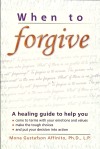
I’ll leave it at that. Food for thought. Knowing the hazards of vengeance, how do we handle it when it comes so naturally? It’s complicated. And now I’ll shamelessly refer to my two forgiveness books, both of which recognize that forgiveness is a difficult but doable process: When to Forgive and Forgiving One Page at a Time.
And if you come across some nice, tidy “forgiveness” saying, I’d be very happy if you’d share it in a comment. Or maybe even a personal story of dealing with vengeance?
With this entry, my Asia/Pacific excursion comes to an end. And a very powerful end it is!
Our last stop was in Nagasaki, the site that was devastated by the second dropping of the atomic bomb. Only by chance was Nagasaki destroyed, having been the back-up target when weather prevented hitting the initial choice.
The header tells the first part of the story… the total devastation of what was a prison with people in it. All that was left were those rows of melted and twisted material. Here’s the complete photo.

And here’s a photo of the nearby monument erected over ground zero.

If that “prison” photo doesn’t send chills and warnings, I don’t know what might. That’s the devastation side of the experience at the Peace Park.
Now for a series of photos illustrating the other side of the story. The peace park is a monument to the desire for non-violent resolutions to conflict. I couldn’t help but be sensitized to the nuances of forgiveness. At no point in the park or the museum, or the words of the tour guide, did anyone say anything like “When the US dropped the bomb.” In all cases it was “When the bomb dropped.” That simple turn of phrase makes it what they want it to be – a lesson to be learned.
The Peace Park is beautiful and peaceful — except for the tourists, that is. I would have loved to go back for a quiet period with no one taking photos of family and friends in front of the various statues. It almost seemed like desecration. But that’s what tourists do, and I’m sure most were also appreciating the potential serenity of the Park with the powerful message of love and peace.

Many countries (if not all) have contributed statues to the park. Here are some that I managed to photograph with no tourists in front of them.


And finally the visit to the museum, including a wall laying out in a straightforward, factual way the process of arriving at the decision to use the bomb. Again, the message was clearly couched in “When the bomb dropped,” not, as might have been, “When they dropped the bomb on us.”
The photo below marks the entrance to the museum

I found myself pleased to see Eisenhower’s opinion regarding its use. He was not alone in his opinion.
And now for the bookend. I have no photos to show, but I was at Los Alamos, New Mexico, last week — seeing where it began. A moving experience, in effect wrapping the whole thing up in one emotional package. I won’t bore you with going into a discussion of my reactions, but I will say the thoughts and emotions did roil.
This whole experience has only served to strengthen my commitment to restorative practices.
Thanks for joining me on this Asia/Pacific journey.
My friend was outed the other day as a Democrat. “Really?” a man nearby reacted, “But I thought you were a Christian.” Yes. He really believes that Democrats are not Christians. Wow! Is my reaction.
And I’m a Democrat BECAUSE I strive to be a follower of Jesus (who, remember, was a practicing Jew.) Unlike that man, I don’t assume that all members of any political party think alike. I know many Republicans who choose that party because they feel they have a home there for their Christian beliefs, just as I feel the Democratic Party supports more of mine. So why am I a Democrat? (except when I vote for a Reublican.)
I think that with the Democrats I have a better chance for freedom to follow my beliefs without government interference. I do understand that there are those who see things differently – who are sure that a true believer would want to impose the “right” religion by way of government action. You know what? I think they have their right to believe that. That’s why we have discussions, debates, and even elections.
I choose the side of the Democrats, though, because I believe I have a moral/ religious home there. I’ll vote for life every time. That’s right: I’m pro-life; therefore I’m pro-choice. I believe all life is valuable – not just the life of the newly implanted fertilized ovum. In fact, I have a hard time understanding the belief that God somehow loves that embryo so much that it would be worth it to sacrifice the life of the woman He once thought so valuable when she was in the form of an embryo. And have no doubt. A woman’s body is not an inactive box. Pregnancy is a hazard. I’ll stop myself from the rant I want to start about the complexities of pregnancies and choices.
By the way, pro-choice does not mean pro-abortion. I prefer the Democratic position of supporting options for women to gain access to reproductive information and pregnancy prevention. For poor women, that means I’m in favor of supporting Planned Parenthood whose function is to promote the life of both mother and child through prenatal care and health maintenance.
I’m in favor of life for physicians who practice perfectly legal abortions.
Oh, and even if they were illegal, because I am opposed to the death penalty, I’m still in favor of life. I could rant about that too.
I’m opposed to locking people away in privately owned prisons where each inmate represents a profit. I’m in favor of doing all possible to encourage the productive life of those who are or have been inmates.
I believe in an education that encourages creativity, not only for those who can afford it, but for those in poverty whose schools and families need help.
I believe in recognizing the humanity and value of all immigrants.
I’m opposed to war as anything but a very last resort for solving problems.
I believe in maintaining the life of the earth – even the universe — and the scientists who study its health.
I favor an atmosphere that encourages forgiveness and help with forgiveness. Oh, not making excuses for wrongdoing. I said I try to be a follower of Jesus. I don’t believe he ever said, “Oh, don’t worry about it. Just do what feels right to you.” I think he was more likely to say “Go and sin no more.” He was big, I believe, on promoting justice for all, rich or poor, even Samaritans.
OK, there’s more. It seems to me his list of what to do to attain the Kingdom was not to follow a whole bunch of rules. Wasn’t it more like “Love God and love your neighbor as yourself?” See the lessons of Job
Well, anyway. That’s why I feel more at home as a Democrat. And I get it. Not all Republicans identify as Christian and not all Democrats are non-Christians. I like it that way (These days I rarely use the word Christian, now that it’s been so politicized.). There’s room for all of us under the big umbrella that is the United States that brought my parents here as immigrants. That includes Sikhs, Muslims, Mormons, Seventh Day Adventists, Jehovah’s Witnesses, Unitarians, Roman Catholics, Greek Orthodox, Hindu, atheists, agnostics, Lutherans, Presbyterians, Methodists … I know, the list isn’t complete. That’s the point. That’s the America I love.
Today I’m adding the final bulleted suggestions on helping someone decide how to handle a forgiveness issue. All are from pages 4-5 of When to Forgive . Please remember, this is not about a command to forgive. Telling someone to forgive is dangerous. It might result in a quick recitation of “I forgive” without the hard work behind it and accomplishment of the real and important gains of a good forgiveness decision. Shame might be added to the pain of suffering an offense if the victim believes in the “ought to forgive” and can’t. That’s the hazard of sermons — religious or otherwise — that tell the sufferer he or she must forgive. Realistically there may be actions the sufferer must take before genuine forgiveness. Or, it’s even possible that the sufferer might be better off choosing not to forgive. “When to Forgive” is about making and carrying out a decision after careful thought and work.
So, here goes,the final complete list of what you might do to help someone trying to deal with the pain of an offense as he or she considers the forgiveness option.
- Be a good listener. Telling his or her own story is absolutely crucial to a person’s recovery from the effects of an offense. Encourage giving details, but don’t press your own advice or suggestions. Ask questions that encourage going into depth, but be sensitive to the person’s own self-regulating system. Don’t push beyond what he or she is ready to report. There are situations of extreme trauma where the victim is better off not remembering what happened.
- When your friend is asked to ‘probe the wound,’ ask for as much detail as possible. In fact, you may know the situation well enough that you can remember some things your friend has forgotten. But let your friend be in control of how much he or she can tolerate.
- You can discuss and help clarify, but don’t impose your own view. You can also help your companion fend off the efforts of others to dictate their beliefs.
- Your friend making the journey may want you to provide some feedback. Sometimes you may observe things that he or she doesn’t readily see. Often it’s the positives that people have difficulty identifying in themselves.
- As the book progresses, you can serve by moving beyond being the effective listener to being a good discussant. Perhaps you’ll be invited to talk over some ideas presented in the problem-solving phase. Remember to take direction from your friend; let the sufferer tell you how active he or she wants you to be in offering ideas.
- As your friend moves closer to making a decision, the fact that you are familiar with the offense that has occurred, and the people involved, makes you a good potential resource for considering the practicality of any punishment options that may be considered.
- You may gain some insights about yourself in this process and want to get feedback on what you are learning. But remember the focus is on helping to heal the person who suffered the offense.
Today I’m adding the fourth bulleted suggestion from pages 4-5 of When to Forgive. First, though, a reminder. This is not about a command to forgive. Telling someone to forgive is dangerous. It might result in a quick recitation of “I forgive” without the hard work behind it and accomplishment of the real and important gains of a good forgiveness decision. Shame might be added to the pain of suffering an offense if the victim believes in the “ought to forgive” and can’t. That’s the hazard of sermons — religious or otherwise — that tell the sufferer he or she must forgive. Realistically there may be actions the sufferer must take before genuine forgiveness. Or, it’s even possible that the sufferer might be better off choosing not to forgive. “When to Forgive” is about making and carrying out a decision after careful thought and work.
So, here goes, more on what you might do to help someone trying to deal with the pain of an offense as he or she considers the forgiveness option.
- Be a good listener. Telling his or her own story is absolutely crucial to a person’s recovery from the effects of an offense. Encourage giving details, but don’t press your own advice or suggestions. Ask questions that encourage going into depth, but be sensitive to the person’s own self-regulating system. Don’t push beyond what he or she is ready to report. There are situations of extreme trauma where the victim is better off not remembering what happened.”
- When your friend is asked to ‘probe the wound,’ ask for as much detail as possible. In fact, you may know the situation well enough that you can remember some things your friend has forgotten. But let your friend be in control of how much he or she can tolerate.
- You can discuss and help clarify, but don’t impose your own view. You can also help your companion fend off the efforts of others to dictate their beliefs.
- Your friend making the journey may want you to provide some feedback. Sometimes you may observe things that he or she doesn’t readily see. Often it’s the positives that people have difficulty identifying in themselves.
Today I’m adding the second bullet to the guides for someone who’s trying to help a friend or acquaintance work through the issue of whether and how to forgive. Maybe to get oriented, you might want to read yesterday’s blog.
Following are the first two suggestions for the helper from pages 4-5 of When to Forgive..
- Be a good listener. Telling his or her own story is absolutely crucial to a person’s recovery from the effects of an offense. Encourage giving details, but don’t press your own advice or suggestions. Ask questions that encourage going into depth, but be sensitive to the person’s own self-regulating system. Don’t push beyond what he or she is ready to report. There are situations of extreme trauma where the victim is better off not remembering what happened.”
- When your friend is asked to ‘probe the wound,’ ask for as much detail as possible. In fact, you may know the situation well enough that you can remember some things your friend has forgotten. But let your friend be in control of how much he or she can tolerate.
Over the next few days I’ll be adding more bullet points. In the meantime, I’d love some feedback. Examples of helping or being helped would be wonderful.
And a reminder of the real Palestinian/Israeli situation as well. Thanks to Sojourners, one of my favorite magazines, whose title reminds me that we are all just traveling through. fighting-real-enemy-fear#.UAxTUt8t6-w.facebook





 monagustafsonaffinito